

 Juniper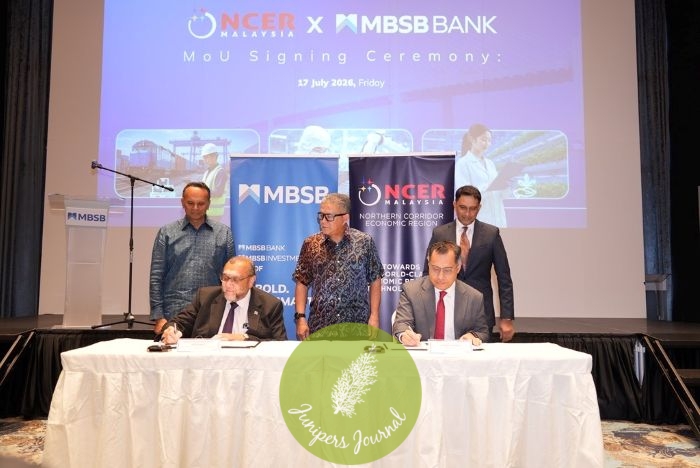
MBSB Bank Berhad (“MBSB Bank”) today signed a Memorandum of Understanding (MoU) with the Northern Corridor Economic Region (NCER), underscoring a strategic collaboration to accelerate economic growth across the Northern Corridor through a RM1 billion financing initiative and comprehensive Islamic financial solutions.
The collaboration reinforces MBSB Bank’s commitment to supporting businesses, investors and strategic development projects across the Northern Corridor Economic Region by improving access to financing and value-added banking solutions. Encompassing Perlis, Kedah, Pulau Pinang and Perak, the NCER has established itself as one of Malaysia’s fastest-growing economic regions, attracting substantial domestic and foreign investments in electrical and electronics (E&E), advanced manufacturing, logistics, agribusiness, the digital economy and other high-value industries. Supported by robust infrastructure, industrial parks and government-led initiatives, the region presents significant opportunities for businesses across the economic value chain.
Recognising the region’s strong growth trajectory, MBSB Bank is strengthening its role as a strategic financial partner by delivering financing solutions that enable businesses to expand, innovate and contribute to Malaysia’s long-term economic development. Complementing this commitment, the Northern Corridor Implementation Authority (NCIA) continues to drive the development of NCER’s flagship thematic industrial parks, including Chuping Valley Industrial Area (CVIA) in Perlis, Kedah Rubber City (KRC) and Kedah Science & Technology Park (KSTP) in Kedah. These specialised industrial ecosystems are designed to attract high-value industries, strengthen regional supply chains, stimulate investments and create quality employment opportunities, while providing a strong pipeline of projects that can benefit from
strategic financing partnerships.
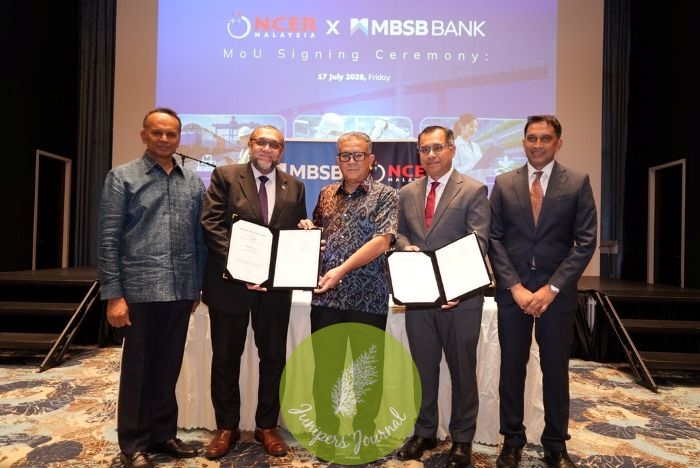
Under the MoU, MBSB Bank will work towards becoming one of the NCER’s strategic financial partner by offering a comprehensive suite of Islamic banking solutions, including project and business financing, operating and escrow accounts, cash management, trade finance, payroll solutions, treasury services, digital banking capabilities and other commercial banking offerings. The synergy provides a structured platform for both organisations to identify and pursue strategic opportunities, strengthen stakeholder engagement and enhance governance, while supporting the Government’s agenda of accelerating investments and sustainable economic growth in the Northern Corridor.
Rafe Haneef, Group Chief Executive Officer of MBSB Berhad, said “The Northern Corridor continues to attract high-value investments and offers tremendous opportunities for businesses across the railway, automotive, E&E, aerospace and manufacturing industries to grow. Through this RM1 billion financing initiative and our collaboration with NCER, we are committed to empowering businesses with the financing and banking solutions they need to expand confidently and contribute to the region’s long-term economic development.”
Dato’ Mohamad Haris Kader Sultan, Chief Executive of NCIA, said this strategic partnership will strengthen the ecosystem supporting NCER’s strategic growth sectors, including Electrical & Electronics (E&E), advanced manufacturing, agri-food, logistics, digital economy and green technology. More importantly, it provides greater opportunities for SMEs, local entrepreneurs and supply chain partners to access financing that enables them to expand capacity, adopt technology, improve productivity and integrate into the value chains of multinational corporations operating within NCER’s region.
The cooperation underscores MBSB Bank’s commitment to supporting Malaysia’s regional economic agenda by enabling greater access to financing, strengthening business resilience and facilitating sustainable investments across the Northern Corridor. By combining MBSB Bank’s banking capabilities with strategic partnerships, the initiative aims to create long-term value for businesses, communities and the broader economy.