

 Juniper
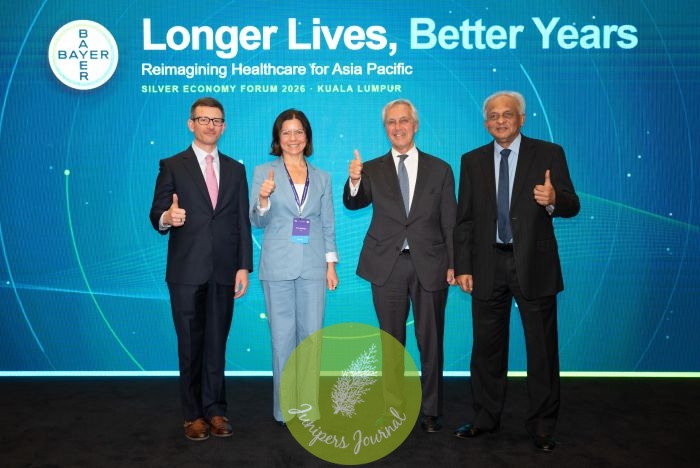
Speakers at the media event
(L-R) Simon Rosof, Head of Asia Pacific Region, Bayer Pharmaceuticals; Dr Maria Borentain, Global Vice President and Head of Cardiovascular and Renal Clinical Development, Bayer; Michael Hodin, Chief Executive Officer, Global Coalition on Aging; and Prof Nathan Vytialingam, President, Malaysian Healthy Ageing Society, at Longer Lives, Better Years: Reimagining Healthcare for Asia Pacific, a Bayer media event held alongside the Silver Economy Forum 2026 in Kuala Lumpur
Bayer yesterday called for earlier diagnosis, effective treatment and greater investment in prevention as Asia Pacific confronts rapid population ageing and a growing burden of chronic disease.
By 2050, nearly 1.3 billion people in Asia Pacific, one in four of the population, will be over 60.1,2 At the same time, cardiovascular disease, stroke, diabetes and cancer are placing growing pressure on patients, families, health systems and economies across the region.
The call came at Longer Lives, Better Years: Reimagining Healthcare for Asia Pacific, a Bayer media event held alongside the Silver Economy Forum 2026 at the Kuala Lumpur Convention Centre. Hosted by the Global Coalition on Aging (GCOA) and the Malaysian Healthy Ageing Society (MHAS) on 11 and 12 November, the forum is being held in Asia Pacific for the first time.4
Bayer and health and ageing experts called for a shift from responding to disease only once it becomes serious to identifying risk earlier, treating disease effectively and investing more systematically in prevention.
As an immediate step, Bayer urged adults over 40 to know three key indicators of cardiovascular and metabolic risk: blood pressure, cholesterol and blood sugar.
“Asia Pacific is going through one of the fastest demographic shifts in the world. We need to make sure that longer lives are also healthier lives,” said Simon Rosof, Head of Asia Pacific Region, Bayer Pharmaceuticals. “That means finding disease earlier, treating it effectively and recognising prevention as an investment in people, health systems and economies. The time to act is now.”
Turning extra years into healthy years
New global research shows the gap between how long people live and how long they stay healthy is widening almost everywhere. A Global Burden of Disease study published in The Lancet Public Health in July 2026 found that people worldwide now spend an average of 10.7 years in poor health, up from 8.8 years in 1990, and that the gap grew in 203 of the 204 countries and territories studied.5
Asia Pacific is part of this picture, including its best performers. Singapore now leads the world in both life expectancy and healthy life expectancy, and even there the gap has grown as people live longer.5 Across the region, a person who reaches 60 loses almost five years, about a quarter of the life they have left, to disease and disability.2
Chronic disease drives much of this. Heart disease, stroke, diabetes and cancer now account for nearly nine in ten deaths in the Western Pacific Region,6 and many of the conditions behind them develop for years without symptoms. In Malaysia, for example, the National Health and Morbidity Survey 2023 found that about one in three adults has high cholesterol, and more than half of them do not know it.7
“Most people think ageing is about living longer. The real challenge is staying healthier for longer,” said Dr Maria Borentain, Global Vice President and Head of Cardiovascular and Renal Clinical Development at Bayer. “Every year we diagnose heart disease, kidney disease or diabetes earlier, and every stroke we prevent, is a year someone stays at work, at home and out of hospital. For the millions across this region already living with these conditions, good treatment is what lets them keep living independently.”
Stroke: where earlier action matters most
Speakers pointed to stroke as the clearest example of what is at stake. Asia accounted for 61% of the world’s stroke deaths in 2020, about 4.1 million people, and that share is forecast to reach 69%, about 6.6 million deaths a year, by 2050.3 One in four adults worldwide will have a stroke in their lifetime.8 High blood pressure is the leading risk factor for stroke across Asia, with diabetes usually second.9
Stroke also strikes earlier than many expect. In Malaysia, someone has a stroke roughly every 13 minutes, and about 40% of patients are under 60,10 many of them still working and raising families. For survivors, the risk does not end with the first stroke: between 10% and 16% have another within a year, and recurrence rates have barely moved since the late 1990s.3
Dr Borentain described how research is now challenging that picture, citing a large international trial of a new approach to preventing a secondary stroke, published in the New England Journal of Medicine in April 2026. It involved more than 12,000 patients in 37 countries, including over 3,500 in Asia Pacific.11
The case for acting early
The economic case is as strong as the medical one. Stroke alone costs the world more than US$890 billion a year, a figure projected to reach US$2.31 trillion by 2050.8 As workforces shrink, every year of good health matters more to economies as well as families.
Host country Malaysia shows the scale at national level. Non-communicable diseases cost the country RM64.2 billion (about €14.0 billion) a year, equal to 4.2% of GDP, and four-fifths of that is lost productivity rather than healthcare spending.12,13
“Longevity is the great achievement of our time, and Asia Pacific is where that story is moving fastest,” said Michael Hodin, Chief Executive Officer of the Global Coalition on Aging. “Whether those extra years are healthy, active and productive depends on the choices governments, industry and communities make now. The countries that treat healthy longevity as an investment in their economy, as well as their health system, will be the ones that thrive.”
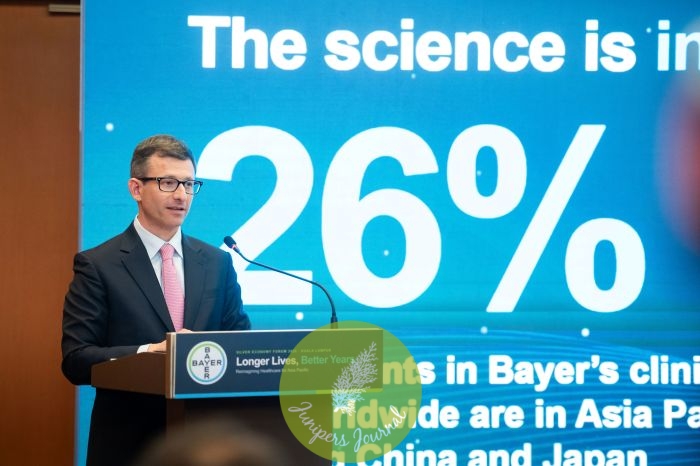
Simon Rosof, Head of Asia Pacific Region, Bayer Pharmaceuticals, shares that Asia Pacific, including China and Japan, now accounts for 26% of participants in Bayer’s clinical trials worldwide, helping research reflect patients in the region and bringing innovation to them sooner
What it will take
Panellists agreed on four shifts that would turn longer lives into healthier ones across the region:
- Find it earlier. Routine checks for blood pressure, cholesterol, blood sugar and kidney function from midlife, so the millions who do not know they are unwell can be treated before complications set in.
- Treat it well. For people already living with heart disease, stroke, kidney disease or failing sight, good treatment and follow-up are what keep them independent.
- Count prevention as an investment. Weigh earlier diagnosis and treatment against the full cost of chronic disease, including lost productivity, and not only against health budgets.
- Build it together. Governments set the framework, industry brings the science, and clinicians and community groups bring the trust of patients.
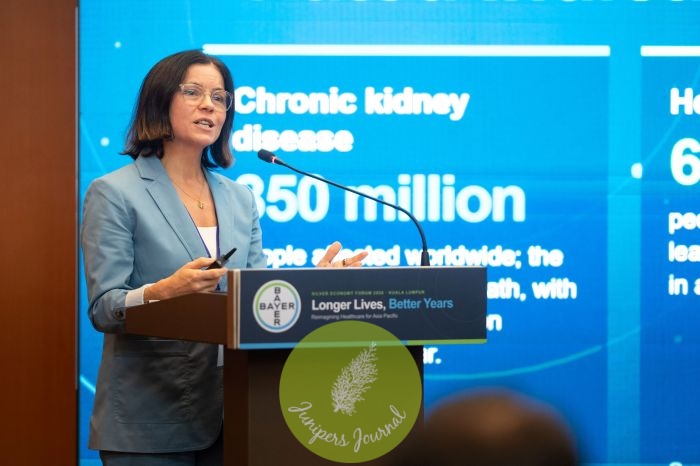
Dr Maria Borentain, Global Vice President and Head of Cardiovascular and Renal Clinical Development, Bayer, presenting her keynote on the future of secondary stroke prevention, and the wider burden of age-related conditions such as chronic kidney disease, which affects 850 million people worldwide
One change for the next 12 months
Closing the panel, each speaker named one change they would like to see across the region in the next 12 months. Simon Rosof called for closer partnership between governments, clinicians and industry, so that innovation reaches patients across Asia Pacific sooner. Prof Nathan Vytialingam called for every adult over 40 to know three numbers: their blood pressure, cholesterol and blood sugar. Dr Borentain asked that every stroke survivor should be aware that the risk of a secondary stroke could be reduced, and talk to their doctor about it. Michael Hodin urged governments to place healthy longevity in their economic plans as well as their health plans.
“Living longer is a gift, and families everywhere want those years to be good ones,” said Prof Nathan Vytialingam, President of the Malaysian Healthy Ageing Society. “The most useful thing anyone can do this year is simple. Go for a health check, know your numbers, look after your eyes as well as your heart, and take your parents with you.”
The Silver Economy Forum 2026 continues at the Kuala Lumpur Convention Centre on 12 November, bringing together policymakers, industry and experts from across Asia Pacific to discuss how healthy longevity can drive economic growth. It takes place as the world passes the halfway mark of the United Nations Decade of Healthy Ageing, which runs to 2030.14